

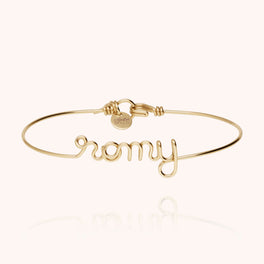
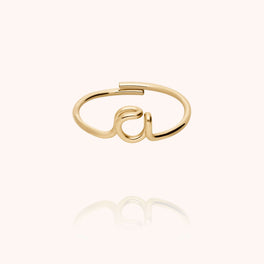
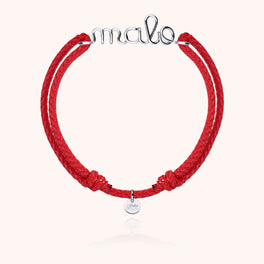
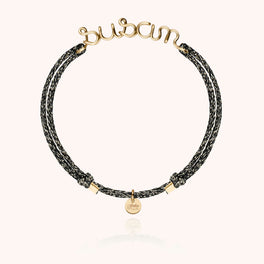



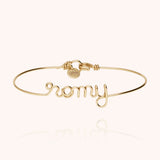
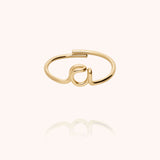
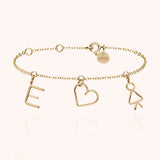
The men's tennis bracelet is no longer just a red-carpet accessory: it has become an everyday piece, worn alone or layered with other bracelets. But choosing a good men's tennis bracelet raises a question that's both simple and technical: what wire weight, what clasp, what material for a wrist that moves, works, and sweats?
Since 2014, Atelier Paulin has hand-shaped precious wire — sterling silver, 14k gold-filled, 18k gold — to give every tennis bracelet a fit and longevity designed for real everyday wear by men, not just for looks. This guide answers three concrete questions: which material to choose, how to measure the wrist correctly, and what sets a genuinely hand-shaped piece apart from a mass-produced one.
What a men's tennis bracelet really is (and where the name comes from)
The tennis bracelet was born by chance: a professional tennis player, after losing her gemstone bracelet during a match, stopped play to look for it on the court. Since then, the name has stuck to designate a continuous line of stones or links, set on a fine wire or chain, often worn discreetly, without a prominent visible clasp.
For men, the modern take often moves away from a line of stones to favor a solid, sculpted wire, where weight and thickness make all the difference in daily wear: sport, office, handshakes. A successful men's tennis bracelet isn't judged on its silhouette alone, but on how it withstands the friction of a watch, an active wrist, a repeated gesture.
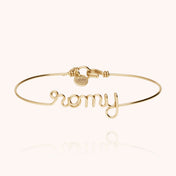
At Atelier Paulin, every piece is sculpted in gold or silver wire — never carved into a flat surface the way a hand-shaped piece would not be. The difference can be felt to the touch: a 3D relief, not a pattern set onto the surface. This hand-shaping approach is the same one that founded the Maison in 2014, with its iconic piece, the Original Personalized Bracelet.
To explore the other codes of men's jewelry — necklaces, hoops, wider bracelets — the dedicated collection remains the most complete starting point: the bracelets collection brings together pieces designed for everyday wear, for men and women alike.
If you're also looking for other pieces to pair it with, like a men's necklace or earring, the reasoning around material and weight stays the same — we come back to that in the following sections.
Sterling silver, gold-filled, or 18k gold: which wire to choose
Choosing the material isn't just about looks — it changes the weight, durability, and everyday upkeep of the bracelet.
Sterling silver is an alloy containing 92.5% pure silver, bright and luminous white, hypoallergenic and antibacterial — a sound choice for sensitive skin or intense daily wear. It is, however, a "living" metal: on contact with air or moisture, a light tarnish can appear, a natural and reversible phenomenon that never affects the quality of the piece. For this reason, it's best to avoid the pool, shower, and sport with a silver bracelet.
14k gold-filled, also known as Gold Filled, is a solid layer of 585 gold applied under heat to a brass base. It contains 50 to 100 times more gold than traditional gold plating. A real advantage for an active man: it doesn't mind water, showers and pools are fine, the only precaution being to remove it during intense physical activity to preserve the delicacy of the hand-shaping. It comes in yellow and rose only — there is no white version.
18k gold (750/1000) is a solid gold wire that's 75% pure gold, hallmarked and certified, shaped by a Maison jewelry artisan. It comes in yellow, rose, and white, and only needs simple care with lukewarm water and mild soap.
For a men's tennis bracelet intended for intensive daily wear, gold-filled is often the most fitting compromise between water resistance and lightness of the wire. The full material comparison for a man's wrist is developed in our men's bracelet guide, useful for refining this choice based on wrist shape.
Recognizing genuine hand-shaping in precious wire
Many tennis bracelets on the market are presented as "artisanal" but are actually mass-produced through casting or industrial stamping. The difference with a piece genuinely sculpted in wire can be seen and felt.
A hand-shaped wire keeps a three-dimensional relief: the artisan's gesture gives the metal a form in volume, not a pattern set onto a flat surface. At Atelier Paulin, every bracelet is made from a single wire of precious metal, hand-shaped, then reinforced at tension points by laser micro-welding — never "without welding," we should clarify, since the laser reinforcement is precisely what ensures its resilience over time.
One essential step follows the shaping: work-hardening. This cold-working of the metal, carried out across the whole piece once shaping is complete (never letter by letter or segment by segment), gives the wire its shape memory and resilience — a technical point that explains why a tennis bracelet in hand-shaped wire keeps its form after years of wear, unlike a piece that's simply stamped.
These manufacturing details aren't incidental for a man who wears his bracelet daily: a watch, sport, repeated handshakes all put strain on the structure of the piece. A dedicated guide details exactly how to spot these signs of genuine craftsmanship: how to recognize genuine hand-shaping in a tennis bracelet, a recommended read before any purchase.
Fit, clasp, and comfort: the details that make the difference on a man's wrist
A poorly sized men's tennis bracelet is noticeable right away: too loose, it spins around and catches on sleeves; too tight, it marks the skin and restricts wrist movement.
The most reliable measurement is the one taken directly on the wrist, using a soft tape measure or a piece of string then laid against a ruler, adding a bit of ease depending on whether you prefer a snug or looser fit. For intensive daily wear, a little extra ease avoids a pinching feeling during wrist movement, especially during sport or when handling tools.
The clasp deserves just as much attention as the material. A sturdy clasp that's easy to operate with one hand makes a real difference in everyday use of a tennis bracelet — a point often overlooked in favor of looks alone.
On the manufacturing side, timelines vary by material: 1 to 3 business days for sterling silver and gold-filled, 2 to 5 business days for 18k gold — this is the time spent hand-shaping at the atelier, not including shipping. Home delivery then takes place within 2 to 5 days, shipping included. For customers in Paris, two options are available: in-studio personalization in about thirty minutes, or same-day courier delivery.
These manufacturing and timeline benchmarks apply to all of the Maison's hand-shaped pieces, including complementary jewelry such as a men's necklace you might want to pair with the bracelet.
Pairing the tennis bracelet: necklaces, earrings, and other men's pieces
A men's tennis bracelet is rarely worn alone in a well-thought-out jewelry wardrobe. The most understated balance is to pair one strong piece on the wrist with one or two finer pieces elsewhere — a short chain, an ear cuff, a simple ring.
For the ear, our dedicated guide explores how to choose a men's piece in hand-shaped wire, from choosing the material to the shape best suited to a given face: men's earring. Keeping materials consistent across pieces — sterling silver with sterling silver, gold-filled with gold-filled — remains the safest guideline for a cohesive set over time, especially given the natural and reversible tarnishing of silver.
To discover the full range of the Maison's collections beyond the tennis bracelet alone, the collections homepage offers a useful overview for building a coherent jewelry wardrobe, piece by piece, to suit every occasion.
Frequently Asked Questions
Can you wear a men's tennis bracelet every day?
Yes, as long as you choose the material suited to daily use. Gold-filled doesn't mind water and can be worn in the shower or at the pool, with the only precaution being to remove it during intense physical activity. Sterling silver needs a bit more attention: it's best to avoid sport, the pool, or the shower, due to a natural and reversible tarnishing that's specific to this living metal. 18k gold only needs simple care with lukewarm water and mild soap.
What's the difference between gold-filled and 18k gold for a tennis bracelet?
14k gold-filled, also called Gold Filled, is a solid layer of gold applied to a brass base, containing 50 to 100 times more gold than traditional gold plating. It comes in yellow and rose only. 18k gold (750/1000) is a solid gold wire that's 75% pure gold, hallmarked and certified, available in yellow, rose, and white. Both are hand-shaped, but the latter offers a white tone that's not possible in gold-filled.
How long does it take to make a custom men's tennis bracelet?
Shaping at the atelier takes 1 to 3 business days for sterling silver and gold-filled, and 2 to 5 business days for 18k gold — this timeframe covers manufacturing only, not shipping. Home delivery then takes place within 2 to 5 days, shipping included. In Paris, in-studio personalization takes about thirty minutes.
How do you tell a truly handcrafted tennis bracelet from a mass-produced one?
A piece that's truly hand-shaped keeps a three-dimensional relief given by the artisan's gesture on a single wire of precious metal, reinforced at tension points by laser micro-welding, then work-hardened across the whole piece for resilience. A mass-produced piece often shows a more uniform finish and a less dense feel to the touch, without this progressive hand-shaping of the wire.
Can a men's tennis bracelet be returned if it's not liked?
A non-personalized piece of jewelry can be refunded or exchanged. However, a piece hand-shaped to order with a word or specific personalization cannot be exchanged or refunded, since it's made exclusively for the customer who ordered it.
Discover our selection of hand-shaped bracelets in the bracelets collection — precious wire hand-shaped in Paris since 2014, with DHL Express shipping and duties included worldwide.
Article by Emma Van Baal — Editorial, Atelier Paulin. See profile
