



The classic Brazilian bracelet tutorial, the one with knotted cotton threads, remains a gesture of friendship passed down since childhood. But when that bracelet wears out, loosens, or fades after a few months, many people look for an alternative that lasts, especially for a men's bracelet worn every day, on the wrist, under a watch, or stacked with others. This article covers the traditional Brazilian bracelet method, its practical limits, and how Atelier Paulin has hand-shaped, since 2014, a single length of precious wire that keeps that same woven spirit without ever loosening.
The classic Brazilian bracelet tutorial, step by step
The traditional technique uses cotton threads cut to double the wrist length, fixed at the top with a pin, then knotted in a regular pattern (chevron, diagonal, or wave). You start by fixing the threads to a board or with tape, set a lead thread, then repeat simple knots thread by thread until you reach the desired width. Expect 45 minutes to two hours depending on the complexity of the pattern chosen.
This handmade gesture has real value: it gets passed on, given as a gift, and tells a story. But cotton has its physical limits. It frays with water, changes color in the sun, and the sliding closure knot eventually loosens after months of friction.
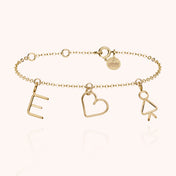
For a men's bracelet worn daily, under a shirt sleeve or during sports, these constraints add up quickly. That is precisely the observation that led Atelier Paulin to offer a version hand-shaped from a single length of precious wire, keeping the spirit of the woven bracelet without its fragility. To compare finishes and materials, the bracelets collection presents the full range of models hand-shaped at the atelier.

Why precious wire changes the equation compared to cotton
The principle stays the same as a Brazilian bracelet tutorial: a continuous band that follows the wrist. The difference lies in the material and the technique. At Atelier Paulin, a single strand of precious metal wire, sterling silver, 14k gold-filled, or 18k gold, is hand-shaped and then work-hardened across the entire piece after shaping. This work-hardening, a cold-working process on the metal, gives the wire its shape memory and resilience, something cotton simply cannot replicate.
The wire is also laser micro-welded at tension points to reinforce its long-term strength, without ever compromising the fluidity of the original hand-shaping. Sterling silver, an alloy of 92.5% pure silver, offers a bright white color and suits sensitive skin well. 14k gold-filled, also known as Gold Filled, contains 50 to 100 times more gold than traditional gold plating and is not affected by water in daily wear.
For a men's bracelet that has to withstand showers, sports, and regular friction, these technical properties matter more than looks alone. The gold bracelets collection lets you compare the yellow and rose tones available in 14k gold-filled and 18k gold.
The cord bracelet, a bridge between woven textile and precious wire
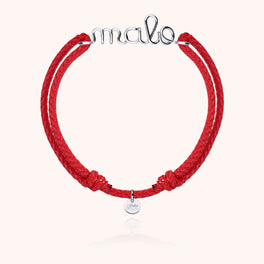
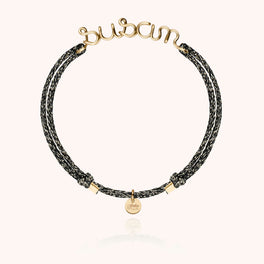
For anyone who likes the idea of a flexible band in the spirit of a Brazilian bracelet without giving up a touch of precious metal, cord remains a relevant option. It is a high-quality synthetic fiber, resistant to water and time, often paired with a clasp or a charm hand-shaped in silver or gold-filled wire.
This format keeps the lightness and adjustability of woven bracelets while adding a piece of precious metal, sometimes personalized with an initial or a short word. It is an accessible entry point for anyone still deciding between woven textile and a bracelet entirely hand-shaped in precious wire.
The cords collection brings together these cord models, designed for everyday wear with no particular upkeep. For a men's bracelet that moves between beach, sports, and office, this is often the most practical compromise before moving to a piece entirely in precious wire.

Personalized men's bracelet: choosing the material and the lettering
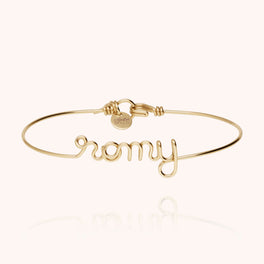
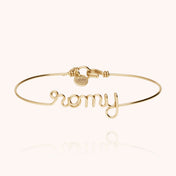
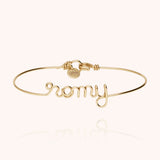
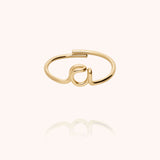
The Original Personalized Bracelet is the atelier's iconic piece, the one it all started with. For a men's bracelet, the choice of material mostly depends on use: sterling silver suits sensitive skin and understated everyday wear, 14k gold-filled is not affected by water and can be worn without taking it off, and 18k gold, a solid gold wire made of 75% pure gold, suits a bolder keepsake piece.
The lettering of the hand-shaped word is entirely in lowercase, except the letter J at the start of a word, which stays capitalized. Accents and apostrophes are not hand-shaped, but spaces can be added on request. For an all-caps look, the Capitale models exist alongside the classic hand-shaped word.
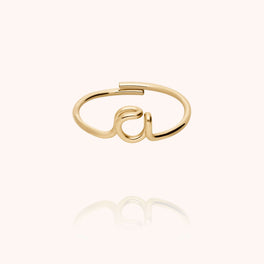
Hand-shaping times range from 1 to 3 business days for sterling silver and gold-filled, and 2 to 5 business days for 18k gold, not including shipping. To discover the dedicated models, the men-bracelet collection brings together pieces designed for a man's wrist, while the personalized bracelets collection presents the full range of personalization options, word or initial, available at the atelier.
Caring for a hand-shaped bracelet: what changes by material
Unlike the cotton of a Brazilian bracelet tutorial, which frays over time, a bracelet hand-shaped in precious wire needs minimal care, though it varies by material. Gold-filled wire needs no particular care, a soft cloth is enough, and it is not affected by water: showers, pools, and the beach are all fine without taking it off, except during intense physical activity, to preserve the delicacy of the hand-shaped form.
Sterling silver is a "living" metal: on contact with air or moisture, a fine layer of oxidation can appear, a natural and reversible phenomenon that fades with a wash in lukewarm soapy water. For this material, it is best to avoid pools, showers, and sports, unlike gold-filled. 18k gold only needs an occasional clean with lukewarm water and mild soap.
Every piece hand-shaped by Atelier Paulin is delivered in a gift box, with no pouch or certificate included. To go further on choosing a material based on the message behind the gift, the article on what a lasting gift says covers these trade-offs for a personalized name bracelet.

Getting your bracelet personalized directly at the atelier
Another key difference from a Brazilian bracelet tutorial made alone at home: you can come have your bracelet personalized directly at the Paris atelier, in about thirty minutes. This service, rare in personalized jewelry, lets you watch the precious wire being hand-shaped in front of you, from choosing the material to the final lettering.
For those who prefer to build their own piece from the catalog, several models serve as a starting point: the Original Personalized Bracelet in yellow gold-filled, its rose gold-filled version, or in silver for a more understated piece. Those drawn to 18k gold will find the yellow, rose, or white model.
For a more structured look, the Richelieu bracelet, available in yellow gold-filled, rose gold-filled, 18k yellow gold, or rose, is a bolder alternative to the soft weave of the traditional Brazilian bracelet.
Frequently Asked Questions
Can a bracelet hand-shaped from precious wire replace a woven Brazilian bracelet?
Yes in spirit, no in technique: the classic Brazilian bracelet relies on cotton threads woven and knotted by hand, while the bracelet hand-shaped by Atelier Paulin starts from a single precious metal wire, sterling silver, 14k gold-filled, or 18k gold, worked and then work-hardened across the entire piece. The result keeps a slim, continuous look on the wrist, but with a resilience over time that cotton cannot offer.
Which material should you choose for a men's bracelet worn every day?
14k gold-filled wire suits intensive daily wear well since it is not affected by water, including showers and swimming pools, and only needs a soft cloth from time to time. Sterling silver remains a good option for sensitive skin, but it is best to remove it before swimming or exercising. 18k gold is better suited to a keepsake piece worn with a bit more care.
Can a men's bracelet be personalized with a full name?
Yes, the Original Personalized Bracelet accepts a word or name hand-shaped in precious wire, in lowercase letters, except the letter J at the start of a word, which stays capitalized. Accents and apostrophes are not hand-shaped, but a space can be added on request. The maximum number of letters depends on the model chosen.
How long does it take to hand-shape a personalized bracelet?
Hand-shaping takes 1 to 3 business days for sterling silver and 14k gold-filled, and 2 to 5 business days for 18k gold, not including shipping time. These timeframes cover the time needed to hand-shape the wire, laser micro-weld the tension points, and work-harden the finished piece.
Can a bracelet be exchanged once the name has been hand-shaped?
A bracelet hand-shaped to order with a chosen word or name cannot be exchanged or refunded, since it is a one-of-a-kind piece made to specification. A non-personalized piece of jewelry, on the other hand, can be exchanged or refunded under the terms in effect.
Looking for a men's bracelet that keeps the spirit of a woven band without its fragility? Discover the models hand-shaped by Atelier Paulin in the men-bracelet collection, or have your piece personalized directly at the Paris atelier.
Written by Emma Van Baal, Editorial, Atelier Paulin — learn more about the author
