

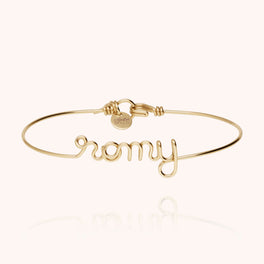
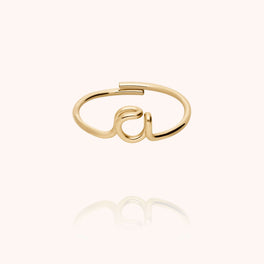
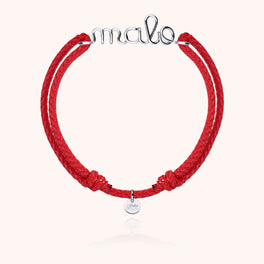
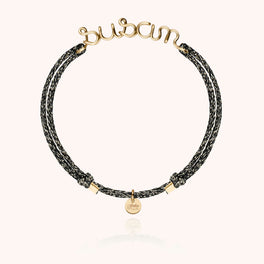

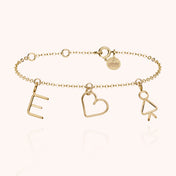
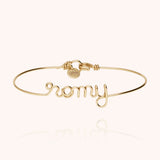
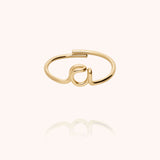
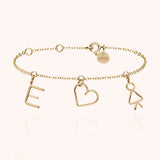

Ear piercing is no longer a stand-alone accessory: it has become a real space for composition, where every piercing tells a style choice. But among the multitude of rings, studs, and chains sold online, figuring out what suits your skin, your lobe, or your cartilage remains tricky. In this article we approach the question from a specific angle: how to plan your ear piercing alongside a hand-shaped jewelry piece, in gold or silver wire, made to last without losing its shine. Since 2014, Atelier Paulin has hand-shaped precious wire in Paris — an experience that directly informs the advice below.
Ear piercing: which zones suit a hand-shaped jewelry piece
The lobe remains the most accessible zone for wearing hoops or hand-shaped studs, but the helix, tragus, and conch call for different thinking about the weight and diameter of the piece. Gold wire that's too heavy on fine cartilage can create unnecessary tension; conversely, a ring that's too thin gets visually lost on a stretched lobe.
At Atelier Paulin, hand-shaping allows the wire's diameter to be precisely adjusted for the targeted zone — a level of detail mass production simply cannot match. Sterling silver 925 wire suits first compositions on cartilage well, while 18k gold, denser to the touch, sits naturally on a lobe pierced long ago.
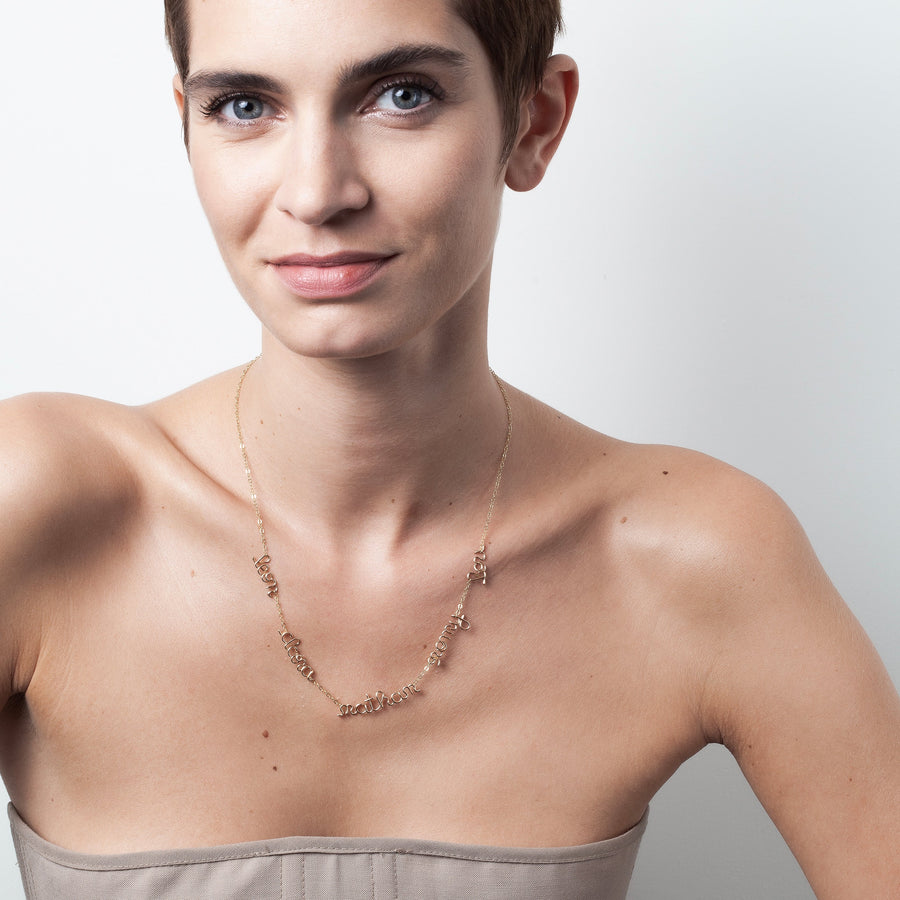
To put together a harmonious ear piercing look, it helps to think in pairs or asymmetric stacks, playing with sizes and materials rather than relying on a single isolated piece. The house's necklace and bracelet selection follows this same logic of considered layering, which transposes well to the ear: collections/necklaces.
Hand-shaped vs. engraved piercing jewelry: the real difference
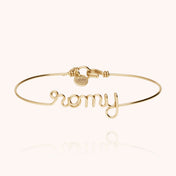
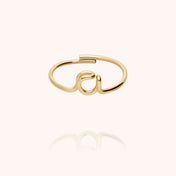
In the ear piercing jewelry market, most pieces sold are stamped or mass-produced, with a flat surface with no real relief. The difference with a hand-shaped piece is felt to the touch: the gold or silver wire is sculpted from precious wire, bent point by point, giving the piece a three-dimensional relief that industrial production doesn't replicate.
Unlike engraving — a flat technique that carves into a surface — hand-shaping literally forms the material in volume. Every letter or curve exists in relief, felt at the fingertips before it's even seen. This is the approach Atelier Paulin has championed since 2014, with laser micro-welding reinforcement at the joining points, for lasting hold on small pieces like those made for ear piercing.
This technical distinction also explains why the weight and thickness of the wire vary slightly from one piece to the next: each piece is hand-shaped, not reproduced identically from a mold. To explore the choice between the different techniques available for a piercing further, the house has dedicated a full article to it: Piercing and hand-shaped jewelry: how to choose without regrets.
Sterling silver 925, gold-filled, or 18k gold: which material to choose
Choosing the material for an ear piercing depends on how often it's worn and on skin sensitivity. Sterling silver 925 offers a solid base for those wearing the piece daily and looking for an accessible first investment. 14k gold-filled (585/1000), available in yellow and rose, offers a warmer shine while staying lighter in weight than solid gold — an important point for sensitive zones like the tragus or helix.
18k gold (750/1000), available in yellow, rose, and white, is the most durable choice over time, with a density that's felt immediately once held in the palm. Unlike gold-filled, which only comes in yellow and rose, 18k gold also offers a white variant for those looking for a cooler tone.
A detail often overlooked: work-hardening — a cold-working process applied to the whole piece after shaping — reinforces the resilience of the wire, whether silver or gold. It's an invisible but decisive technical step for a piece meant to stay in place for months without losing its shape. To see the possible combinations around these materials, the bracelet collection follows the same logic of choosing by material and weight: collections/bracelets.
Personalizing an ear piercing jewelry piece: what's really possible
The idea of having an initial or a small symbol shaped onto a piece intended for the ear appeals to many customers, but a few technical limits are worth knowing before ordering. The lettering offered by Atelier Paulin is exclusively lowercase cursive, except for the letter J at the start of a word, which is hand-shaped in uppercase. Accents (é, è, à) and special characters are not part of what can be hand-shaped, nor are apostrophes — while a space between letters can be added on request.
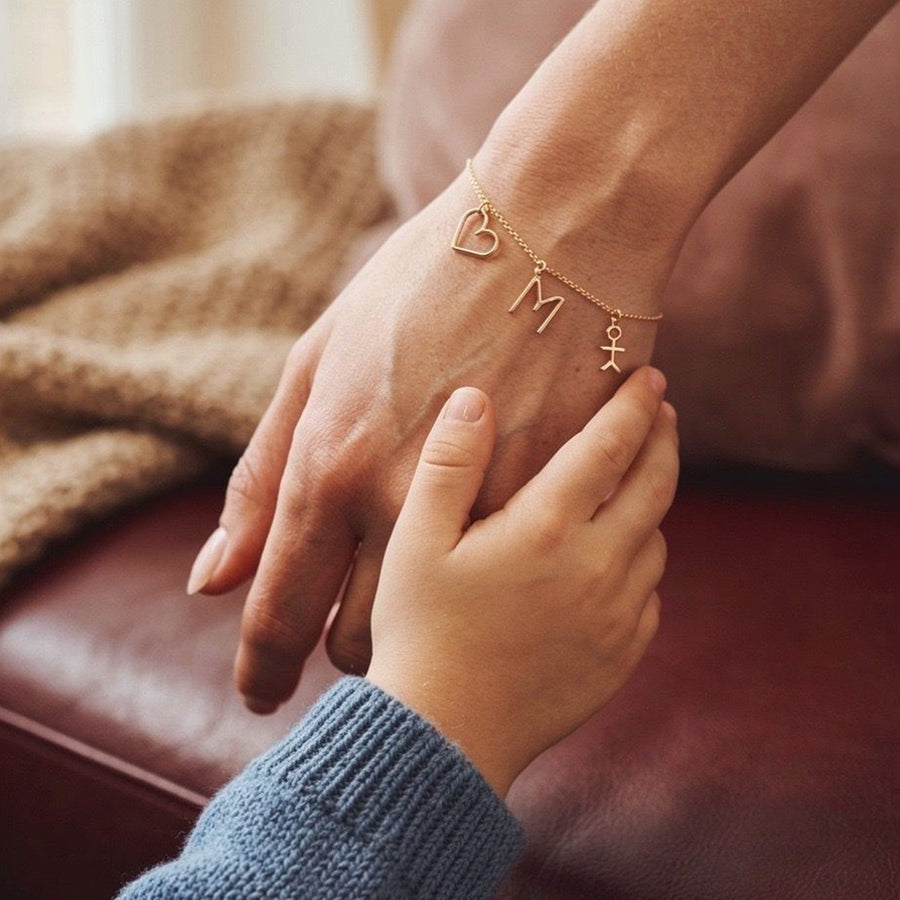
Symbols remain possible, but only on specific request when ordering, not as a standard option. It's also worth remembering that not every piece in the house's range is personalizable: feasibility depends on the model chosen, particularly for smaller pieces made for piercings, where the available space on the wire is limited.
As for timing, a piece in sterling silver 925 or gold-filled takes 1 to 3 business days to make, while a piece in 18k gold takes 2 to 5 business days, shipping excluded. These times reflect the real time spent hand-shaping each piece, one by one, in the Paris atelier. To discover other personalization worlds carrying strong symbolism, the collection dedicated to astrology offers a comparable approach to meaningful jewelry: collections/the-astrology-collection.
Care, warranty, and exchanges: what to know before you buy
An ear piercing jewelry piece is exposed daily to contact with skin, cosmetics, and, at times, water. To preserve its shine, it's recommended to remove it before showering or applying creams, and to store it in its own case when not worn — every Atelier Paulin piece comes presented in a dedicated case.
On the warranty side, all of the house's jewelry pieces are covered by a 1-year warranty from the date of purchase. The shine of gold-filled is the exception, guaranteed for life on this specific aspect — a detail that sets this plating quality apart.
One essential point concerns exchanges: a non-personalized piece can be refunded or exchanged, while a piece hand-shaped to order with a word or an initial chosen by the customer cannot be exchanged or refunded, as it is a one-of-a-kind creation. This also applies to piercing jewelry personalized with an initial or a specific symbol. Before purchasing, it's worth browsing the full range of available collections to compare models and materials: collections/frontpage.
Frequently Asked Questions
What material should you choose for a first ear piercing?
For a first piece intended for ear piercing, sterling silver 925 is often a solid, accessible base suited to everyday wear. 14k gold-filled (585/1000), available in yellow and rose, offers a warmer shine while staying relatively lightweight. 18k gold, denser, suits those who already have an established piercing and are looking for a material meant to last without losing its shine.
Can a piercing piece be personalized with a name?
Yes, but with a few precise technical limits: the lettering is exclusively lowercase cursive, except for the letter J at the start of a word, which is hand-shaped in uppercase. Accents and special characters are not available, nor are apostrophes, while a space can be added on request. Not every model is personalizable — feasibility depends on the piece chosen.
What's the difference between a hand-shaped jewelry piece and a mass-produced one?
A hand-shaped jewelry piece is sculpted from precious wire, bent point by point, which creates a three-dimensional relief you can feel to the touch. A mass-produced piece, often cast in a mold, has a flatter surface with less individual variation. Hand-shaping also requires work-hardening the whole piece after shaping, to reinforce its resilience over time.
How long does it take to receive a personalized piercing jewelry piece?
Manufacturing times vary by material chosen: 1 to 3 business days for sterling silver 925 and gold-filled, 2 to 5 business days for 18k gold. These times do not include shipping. Each piece is made in the Paris atelier after order confirmation, according to the model and personalization requested.
Can a personalized piercing jewelry piece be returned?
A non-personalized piece can be refunded or exchanged under standard conditions. On the other hand, a piece hand-shaped to order with an initial, a name, or a symbol chosen by the customer cannot be exchanged or refunded, as it is a unique, made-to-order creation that cannot be resold as a standard item.
Discover Atelier Paulin's collections and put together your ear piercing look with a hand-shaped jewelry piece, handcrafted in Paris: explore all collections.
Article by Emma Van Baal — Editorial, Atelier Paulin. Discover her profile
