

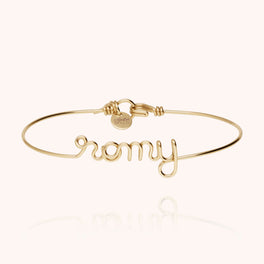
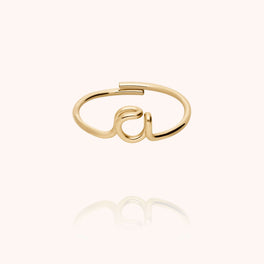
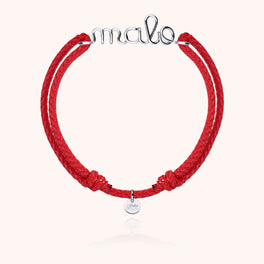
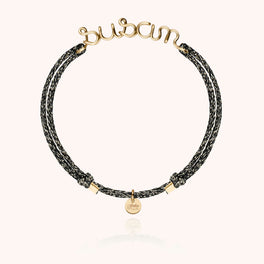

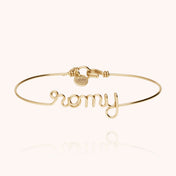

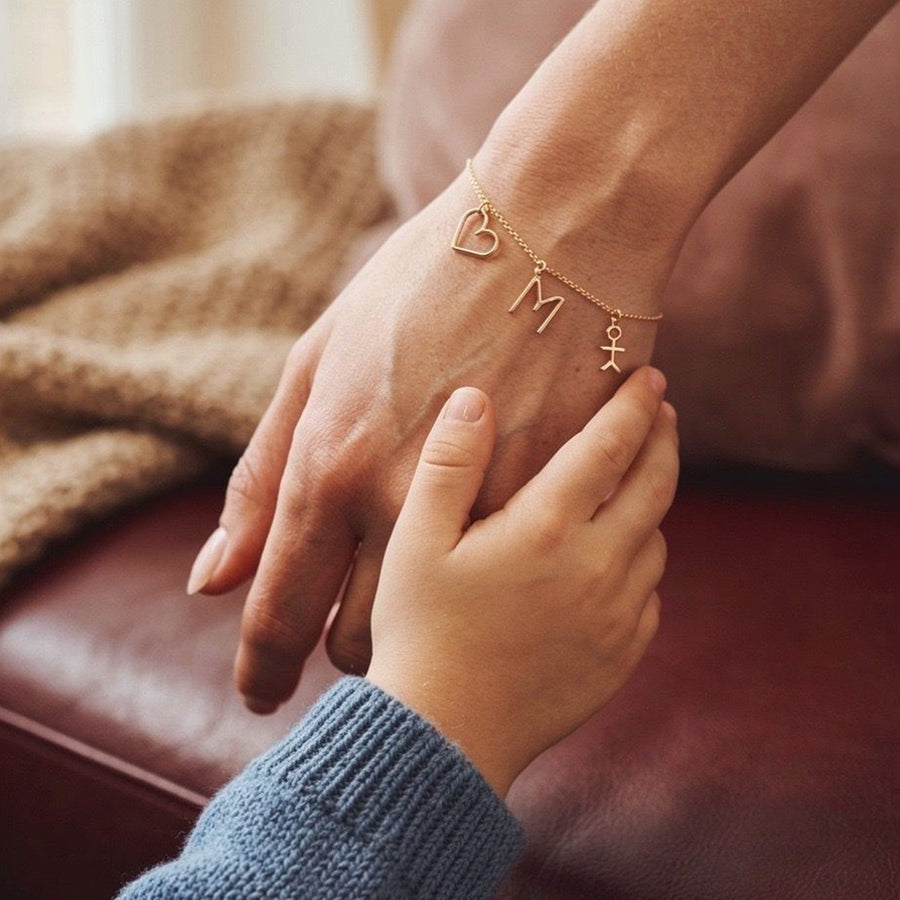

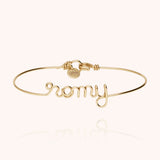
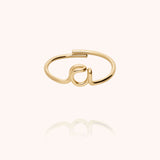
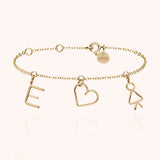

The December birthstone isn't a single stone — it's three: turquoise, zircon, and tanzanite. Anyone born in December, or shopping for someone who was, ends up with more choice than most other months, and more confusion too. Each stone carries a different color story, a different price point, and a different history. This guide breaks down what each one actually means, how they compare for everyday wear, and how a December birthstone can be paired with a hand-shaped personalized piece rather than treated as a stand-alone gem. Atelier Paulin has hand-shaped gold wire jewelry in its Paris atelier since 2014, and birthstone requests are among the most frequent asks from clients building a name bracelet or necklace around a meaningful date.
Turquoise: The Classic December Birthstone
Turquoise is the birthstone most people picture when they think of December — an opaque blue-green mineral that has been mined and worn for thousands of years, from ancient Egypt to the American Southwest. Its color ranges from sky blue to a greener teal, depending on the copper and iron content in the stone, and no two pieces of natural turquoise look quite identical, which is part of its appeal for a birthstone meant to mark an individual.
Because turquoise is a relatively soft stone (a 5 to 6 on the Mohs scale), it's more commonly set than shaped into structural elements of a piece. At Atelier Paulin, clients often ask how turquoise can sit alongside a hand-shaped nameplate rather than compete with it — the answer is usually a small bezel-set stone positioned off to the side of the lettering, so the cursive name stays the visual center and the stone reads as an accent.
Turquoise pairs particularly well with our necklaces, where a single stone can sit at the base of a chain without adding weight or interfering with a pendant's cursive detail. For clients drawn to the idea of birthstones as a category rather than a single piece, browsing the Astrology Collection is a natural next step — it groups pieces designed around personal dates and symbolic meaning, which is the same spirit behind birthstone gifting.
Zircon: The Underrated December Option
Zircon is often confused with cubic zirconia, but the two have nothing in common beyond a similar name. Zircon is a naturally occurring gemstone, mined mostly in Sri Lanka, Cambodia, and Australia, and it comes in a wide range of colors — blue is the most requested for December birthstone jewelry, though it also occurs in yellow, green, and colorless varieties.
What makes zircon interesting for personalized jewelry is its brilliance: it has a higher refractive index than many other natural stones in its price range, meaning it catches light in a way that reads as more faceted and lively than its cost would suggest. This makes it a practical choice for clients who want a visible stone on a bracelet that sees daily wear.
For a December birthstone bracelet, zircon works best as a small accent stone rather than a large central setting, since the goal is usually to complement a hand-shaped name or word rather than overshadow it. A blue zircon set close to the clasp on a fine chain keeps the birthstone present without adding visual weight to the wrist. Anyone building this kind of piece around our bracelets collection can specify the stone placement and cursive wording separately, since the two elements are shaped and set as distinct steps in the atelier's process.
Tanzanite: The Rare December Birthstone
Tanzanite is the newest of the three December birthstones — it was only discovered in Tanzania in 1967 and found nowhere else on Earth in gem quality, which explains both its rarity and its price. Its blue-violet color shifts depending on the light and the angle it's viewed from, a trait gemologists call pleochroism, and it's this shifting quality that makes tanzanite feel different from turquoise or zircon even at a glance.
Because tanzanite is rarer and softer than most stones used in fine jewelry (around 6 to 7 on the Mohs scale), it tends to appear in necklaces and earrings more than in bracelets, which see more daily friction. Clients requesting tanzanite for a personalized piece are usually marking a specific December date — a birth, an anniversary, a name day — and want the stone to carry that weight on its own, paired with minimal additional detail.
A hand-shaped pendant with a small tanzanite setting and a single cursive initial underneath tends to be the most requested combination. The stone and the lettering are shaped as separate elements before being joined, which keeps both details crisp rather than compressed into a single crowded design.
How a December Birthstone Pairs With Hand-Shaped Lettering
A birthstone answers the question of color and meaning; hand-shaped lettering answers the question of identity. Combining the two means deciding, early, which element leads the design. At Atelier Paulin, gold wire is shaped by hand into cursive lettering — the atelier's only lettering style — and the piece is work-hardened as a whole after shaping, not letter by letter, so the finished word holds its form under daily wear.
Lettering is set entirely in lowercase, with one exception: a J at the start of a word is shaped as a capital. Accented characters, special characters, and apostrophes aren't part of what the atelier hand-shapes, though spaces can be added on request, and symbols are possible if requested at the time of order. These are worth knowing before finalizing a name or word to pair with a December birthstone, since the design is built around the exact characters submitted.
Material choice also affects how a stone reads against the metal. Turquoise's blue-green tends to sit well against yellow 14k gold-filled wire, while tanzanite's cooler violet often reads more cleanly against white 18k gold. Sterling silver remains the most neutral base for any of the three December stones. Manufacturing takes 1 to 3 business days for sterling silver and gold-filled pieces, and 2 to 5 business days for 18k gold, before shipping.
Choosing Between the Three December Birthstones
There's no wrong choice among turquoise, zircon, and tanzanite, but the three suit different priorities. Turquoise is the most affordable and the most recognizable as a December stone, which makes it a safe choice for a gift where the recipient's taste isn't fully known. Zircon offers more brilliance per dollar and works well as a discreet accent on a piece worn daily. Tanzanite is the rarest and the most expensive of the three, better suited to a necklace or pendant reserved for special occasions rather than everyday stacking.
Budget aside, wear pattern matters more than most buyers expect. A December-born client who wears one bracelet daily and never takes it off should generally avoid tanzanite, given its lower hardness rating — turquoise or a durable metal-only design holds up better under that kind of use. Someone shopping for an occasional-wear necklace has more flexibility to choose based on color alone.
For buyers comparing birthstone months more broadly — a common scenario when shopping for a couple or a family with birthdays spread across the year — our August birthstone guide covers peridot, sardonyx, and spinel with the same level of detail, useful for planning multiple pieces at once. Multi-stone gifting is also where the More Love collection tends to come up, since it's built around pieces meant to hold more than one meaningful detail.
Frequently Asked Questions
What is the real December birthstone: turquoise, zircon, or tanzanite?
All three are officially recognized December birthstones — there isn't a single correct answer. Turquoise is the traditional, most widely known choice with centuries of history. Zircon and tanzanite were added later by modern gemological associations to give more options across different budgets and colors. Choosing between them usually comes down to personal color preference, budget, and how often the piece will be worn, rather than one stone being more 'official' than the others.
Is tanzanite too fragile for everyday jewelry?
Tanzanite rates around 6 to 7 on the Mohs hardness scale, which is softer than sapphire or diamond. It can handle normal wear but isn't ideal for a piece that gets knocked around daily, like a bracelet worn during manual tasks. It's better suited to necklaces, pendants, and earrings that see gentler handling. If daily durability is the priority, turquoise or a stone-free hand-shaped design tends to hold up better over time.
Can a December birthstone be combined with a name in cursive lettering?
Yes — a birthstone setting and hand-shaped cursive lettering can be combined on one piece, most often on a pendant or bracelet where the stone sits as an accent near the lettering. Lettering is shaped entirely in lowercase, except for a capital J at the start of a word. Accents, special characters, and apostrophes aren't part of what can be hand-shaped, so it helps to confirm the exact wording before ordering.
Does turquoise change color over time?
Natural turquoise can shift slightly in tone with prolonged exposure to oils, lotions, and sunlight, since it's a porous stone. This is a known characteristic of the material rather than a flaw. Removing turquoise jewelry before applying skincare products or swimming helps preserve its original color for longer, which is a common care tip for anyone wearing it as a daily birthstone piece.
What metal pairs best with a December birthstone?
It depends on the stone. Turquoise's blue-green tone tends to stand out against yellow 14k gold-filled wire, while tanzanite's cooler violet often reads more clearly against white 18k gold. Sterling silver works as a neutral base for any of the three December stones — turquoise, zircon, or tanzanite — and is a common choice when the metal is meant to stay understated next to the stone.
Ready to pair a December birthstone with a hand-shaped piece of your own? Explore the Astrology Collection or start with our necklaces to build a design around cursive lettering and stone placement.
Written by Emma Van Baal, Editorial, Atelier Paulin. About the author
